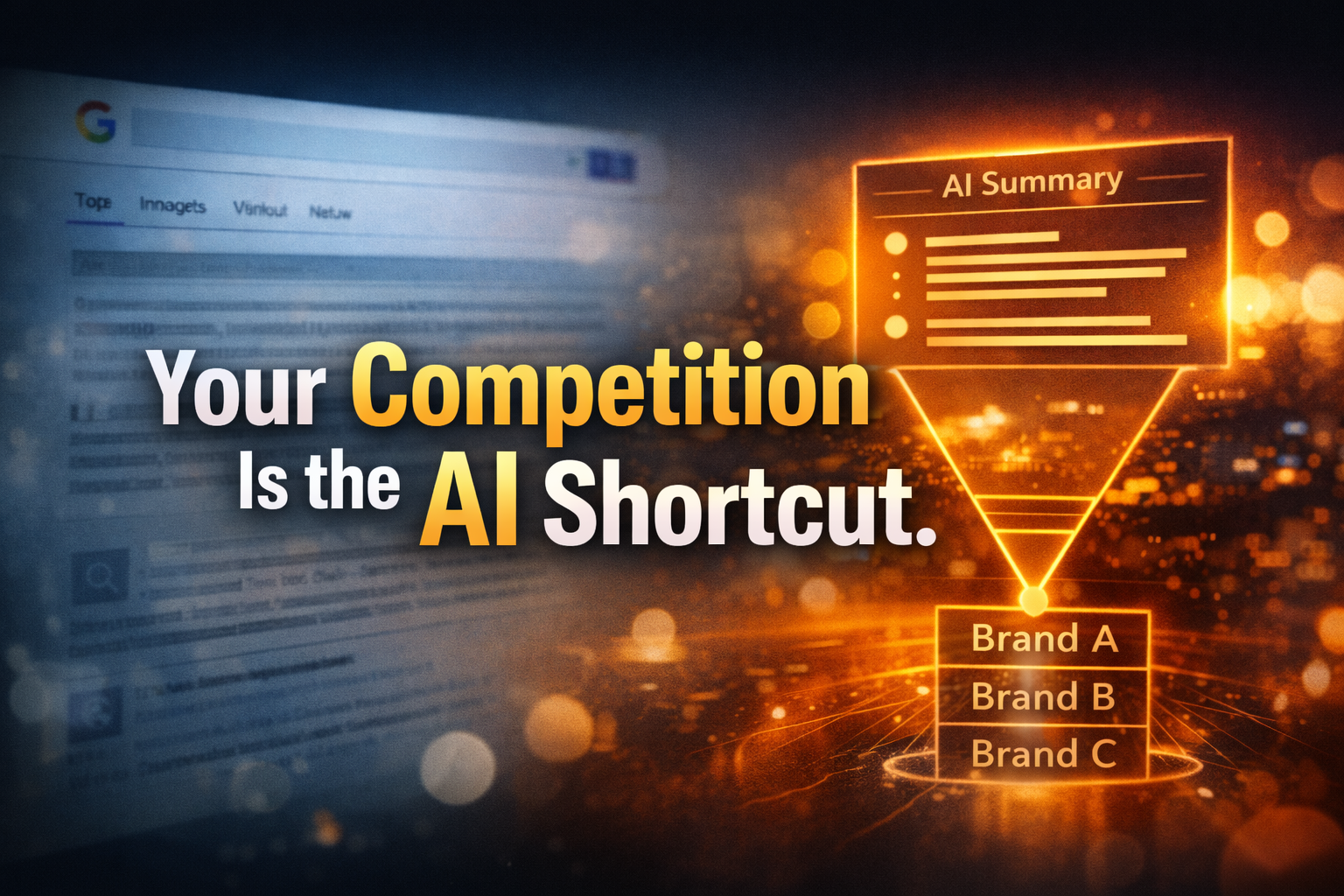

Quick Answer: Your Competition Is the AI Shortcut.
AI summaries can make the shortlist before anyone clicks. Zero-click search is common, so brands that are not cited in AI Overviews start the funnel later. AEO fixes that by writing clear category definitions, building FAQ-driven pages, and linking proof so answer engines can confidently reference you. (SparkToro)
Your biggest competitor is the answer box.
Congrats, you rank. Now the real question: does the summary mention you?
AI Overviews are built to help people find information fast and discover relevant sites across the web, which means the first impression often happens inside the overview layer, not on your website. (blog.google)
Zero-click does not mean zero-decisions
A large share of searches end without a click. In SparkToro’s 2024 zero-click study, 58.5% of Google searches in the U.S. resulted in zero clicks, and only 360 clicks per 1,000 searches went to the open web. (SparkToro)
So if the buyer gets enough confidence from the summary, they shortlist faster. If your name is not in that layer, your funnel starts later and colder.
Mini demo (takes 2 minutes)
- Search your service category + “best” (or “top,” “compare,” “alternatives”).
- Screenshot what shows up when an AI overview appears.
- Count how many brands it effectively blesses by citing them as sources.
- If you are not there, you have a visibility problem even if you “rank.”
What to do next (3-step fix)
1) Write a category definition + differentiation block (40–60 words) for key pages Put it near the top. Make it plain language. Make it quoteable.
2) Build FAQ sections that match real buyer wording Not “What services do you offer?” More like “What is the best approach for ?” “ vs ___?” “How long does ___ take?” “What does ___ cost?”
3) Link proof like you mean it Answer engines trust pages that can back up claims:
- internal links to case studies, methodology, and about pages
- clear definitions, comparisons, and examples
- consistent naming (what you do, who it’s for, where you fit)
Want the fast route?
If it’s not clear whether your brand is being pulled into AI summaries today, we can map the gaps quickly and turn your key pages into pages that are easy to cite.